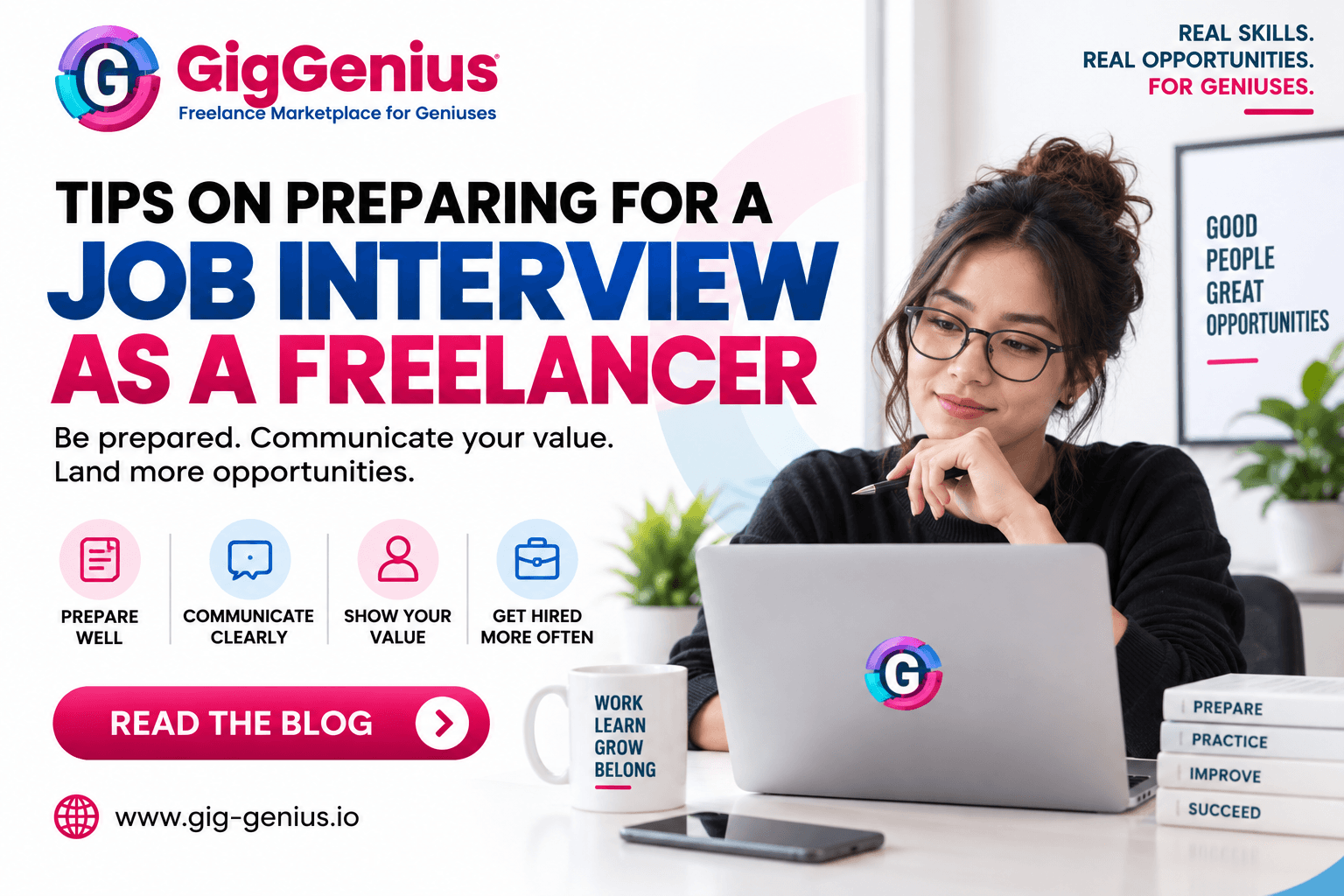
Preparing for a job interview as a freelancer is crucial to showcasing your skills and securing opportunities.
Getting invited to an interview means your profile or application has already caught a client’s attention—but now comes the part where you need to prove that you’re the right person for the job.
Preparing for a job interview as a freelancer is crucial to showcasing your skills, communicating your value, and securing opportunities. Unlike a traditional job interview, freelance clients often want to know more than your qualifications. They want to understand how you can solve their problem, how well you communicate, whether you can work independently, and if they can trust you to deliver what you promise.
Whether you're interviewing for a short-term project or a long-term freelance position, proper preparation can help you communicate your value with confidence.
1. Research the Client Before Your Freelance Interview
Take time to learn about the client, their company, products or services, target market, and the type of work they do. Review their website, social media pages, and the original job post when available. Understanding their business will help you give more relevant answers and demonstrate that you are genuinely interested in the opportunity—not simply applying to every available job.
2. Prepare to Explain Your Relevant Freelance Skills
Be ready to discuss the skills and experience directly related to the position. Instead of simply saying, “I have experience in social media management,” prepare real examples of projects you've handled, tools you've used, challenges you've solved, and results you've achieved. Specific examples make your experience more credible and easier for a potential client to understand.
3. Practice Common Freelance Interview Questions
Prepare for questions about your experience, strengths, weaknesses, availability, communication style, deadlines, and how you handle challenges. Freelance clients may also ask how you manage your workload, communicate remotely, or deal with revisions and unexpected problems. Practice answering naturally rather than memorizing scripted responses.
4. Understand the Job Description Before the Interview
Read the job post again before meeting the client. Pay attention to the required skills, responsibilities, working hours, software, deliverables, and other expectations. Be prepared to explain how your experience aligns with those requirements. This also prevents you from asking questions that were already clearly answered in the job description.
5. Prepare Smart Questions to Ask the Client
Remember that a freelance interview is also your opportunity to determine whether the project is right for you. Ask thoughtful questions about the client's goals, expectations, priorities, deadlines, communication process, and definition of success. Good questions demonstrate initiative while helping both sides determine whether the working relationship is a good fit.
6. Update Your Freelancer Portfolio and Work Samples
Make sure your portfolio contains recent and relevant examples of your work. If you're applying for a specific role, prioritize samples that demonstrate the skills required for that position. Be prepared to explain your contribution to each project rather than simply showing the finished product. Keep professional references available if the client requests them.
7. Test Your Online Interview Setup in Advance
For a remote freelance interview, check your internet connection, microphone, camera, lighting, and meeting software before the scheduled call. Choose a quiet, professional environment and remove unnecessary distractions. Join the meeting a few minutes early so technical problems don't become your client's first impression of you.
8. Be Professional, Confident, and Honest About Your Skills
You don't need to know everything to be a strong candidate. Be confident about what you can genuinely do and transparent about areas where you have limited experience. Don't “fake it till you make it.” Clients are hiring you to perform real work, and setting unrealistic expectations can quickly damage trust. Reliability, communication, willingness to learn, and integrity can be just as important as technical ability.
9. Follow Up After the Freelance Job Interview
Send a short thank-you message after the interview. Thank the client for their time, briefly reiterate your interest in the project. Keep the message professional and concise. A thoughtful follow-up can reinforce a positive impression without becoming overly persistent.
Final Reminder
A successful freelance interview isn't about having the perfect answer to every question. It's about showing the client that you understand their needs, have the relevant skills, communicate professionally, and can be trusted to do what you say you will do.
Prepare well, be honest about your capabilities, and focus on the value you can bring to the project. The goal isn't simply to get hired—it's to build a professional relationship that both you and the client will want to continue.
GigGenius is a platform made for freelancers like you. Don't foget to sign up to www.gig-genius.io! Goodluck on your freelancing journey!